

by Steven Carlson, Curator
Welcome to another EFFIEgram tracing the art and life of Arizona’s earliest Impressionist desert landscape painter - Effie Anderson Smith (1869-1955).
A Reminder…
Our exhibit IMPRESSIONS OF THE DESERT is in its final weeks hosted by our wonderful friends at the Bisbee Mining & Historical Museum. Open EVERY DAY from 10 am to 4 pm (closed only on Thanksgiving & Christmas Day). We look forward to seeing you there!
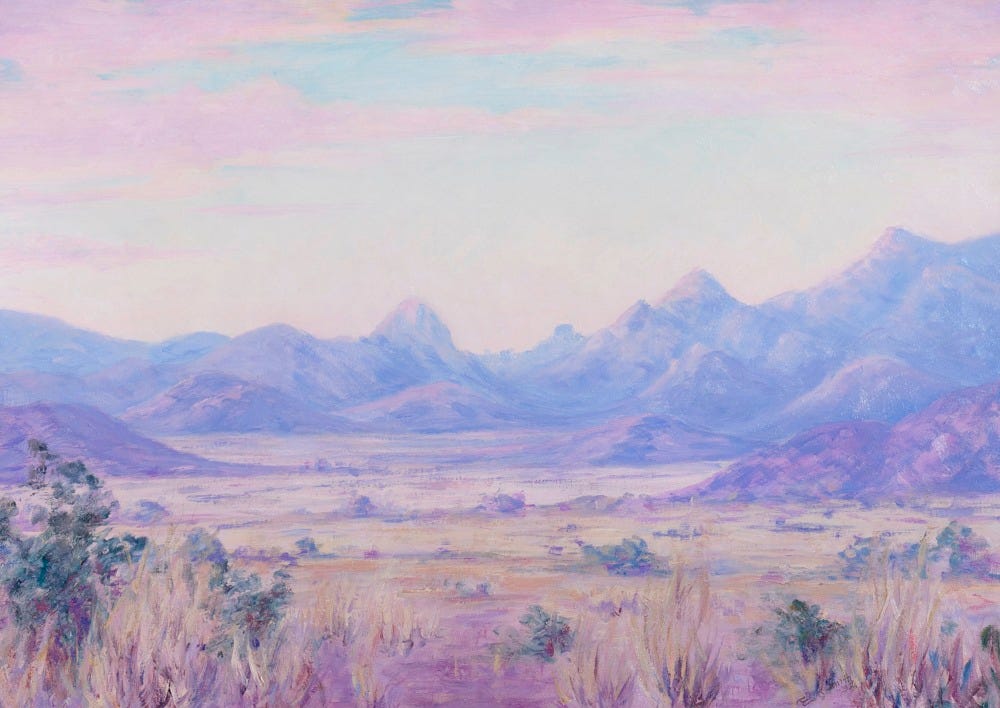
The Mountains of Home…
You’ve probably had this experience. After traveling a significant distance from your home for a day or more, upon your return you round a corner or come down or up a hill - and then something familiar comes into sight. You instantly feel it won’t be long before your journey is at an end, and you are home again.
For Effie Anderson Smith, the Dragoon Mountains - and especially the unique rocky ridge-line of Cochise Stronghold - were certainly the mountains of home she looked for. After all, the Dragoons were nearest to her home in Pearce - and - by the 1920s she had painted her impressions of the Stronghold and the Dragoons more than any other vista. A newspaper in the 1930s stated Effie had already painted the scene fourteen times from various vantage points - and we know through the remainder of her active life as an artist into the early 1950s - she never tired of it.
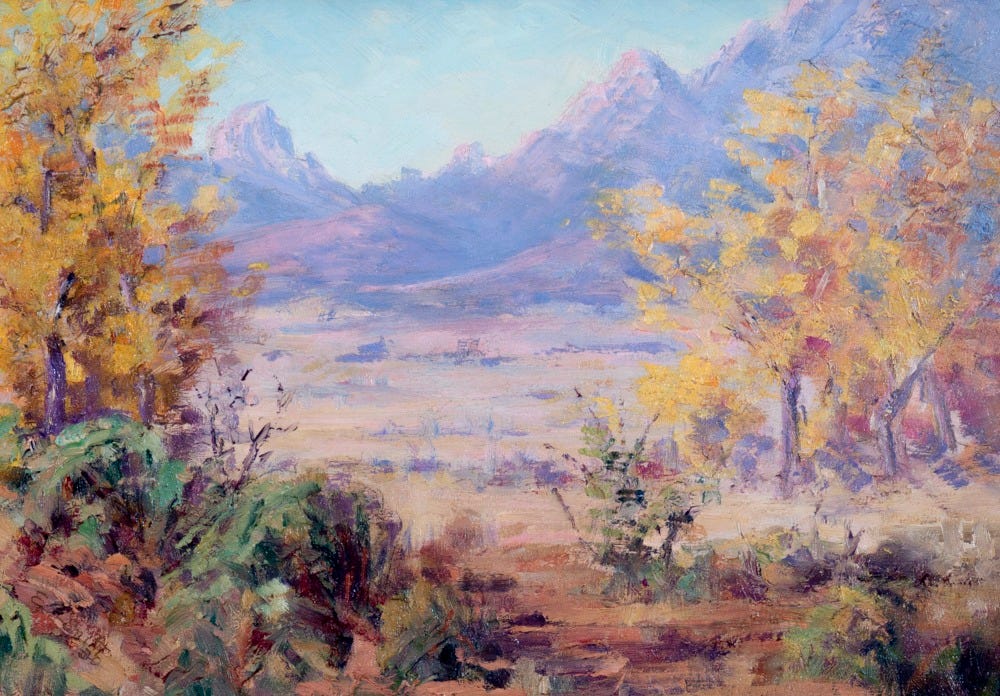
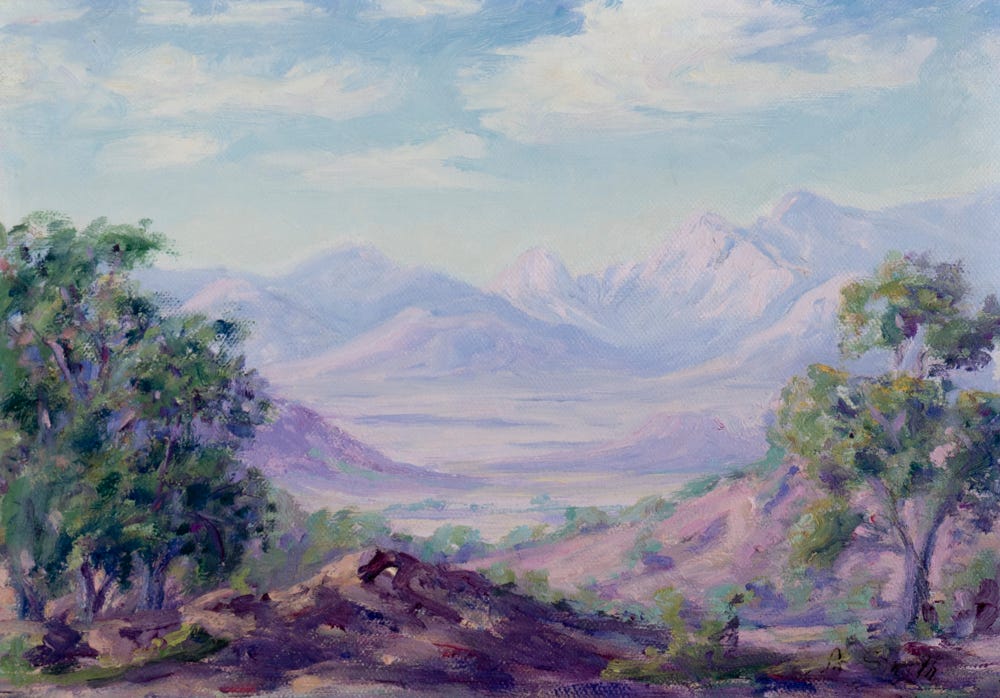
You may ask - what does the artist (and art lover) gain from so many paintings of the same scene? Nuance, for one. Other impressionist artists also enjoyed this challenge.
Frenchman Paul Cézanne had an obsession with Mont Sainte-Victoire near his longtime home in Aix-en-Provence resulting in at least 28 paintings and dozens more watercolors, studies and sketches between 1870 and 1906, capturing impressions of his beloved mountain and the lands below with varying daylight, in different seasons and through changes in vegetation, clouds and weather.
In Effie’s early Arizona paintings (from her arrival in 1895 through about 1925) we see her mostly devoted to the plein air approach, attempting to capture her impression of a scene in a single sitting on smaller canvases (10” x 14” and smaller). Larger canvases probably required her to return for subsequent sittings, though in the case of Cochise Stronghold she could also see that vista from the north and west facing windows of her house in Pearce. By 1926, Effie was well into her 50s and - like Claude Monet in later life - was no longer completely en plein air in her art.
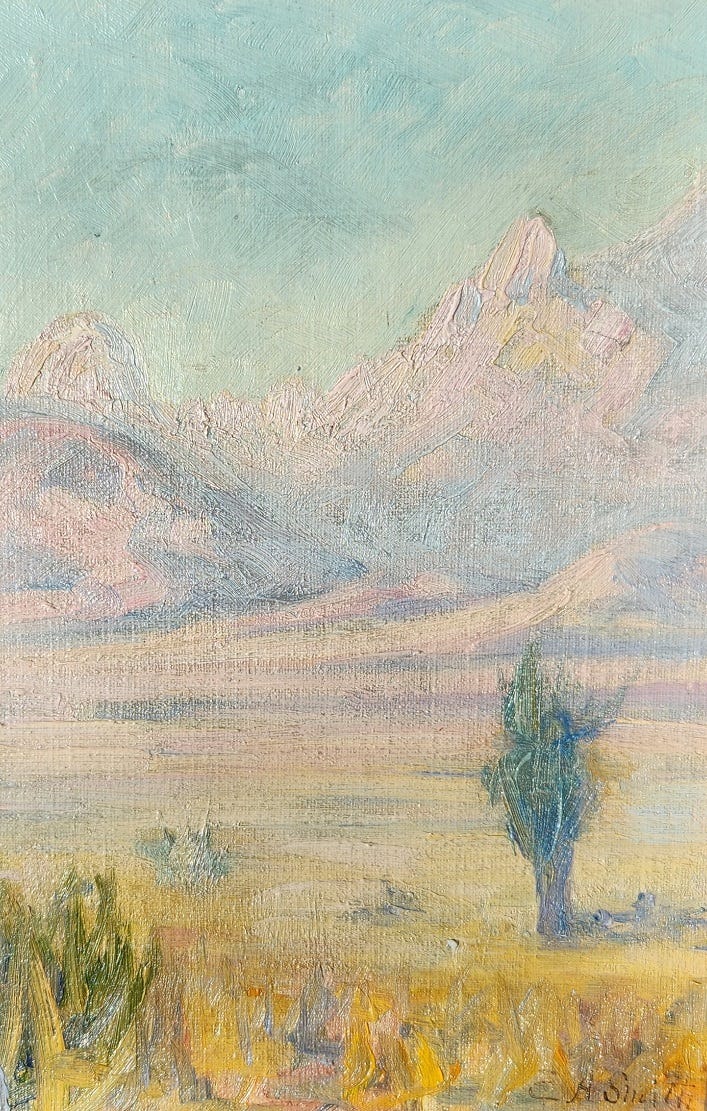
For a time, Effie adhered to the impressionist approach she had studied with California artists Anna Althea Hills in Laguna Beach and Jean Mannheim in Pasadena, but after two decades of working with her mentor’s recommendations she had an epiphany in her efforts to infuse the technique of coastal California Impressionism with the realities of painting in Arizona vs. California or the south of France.
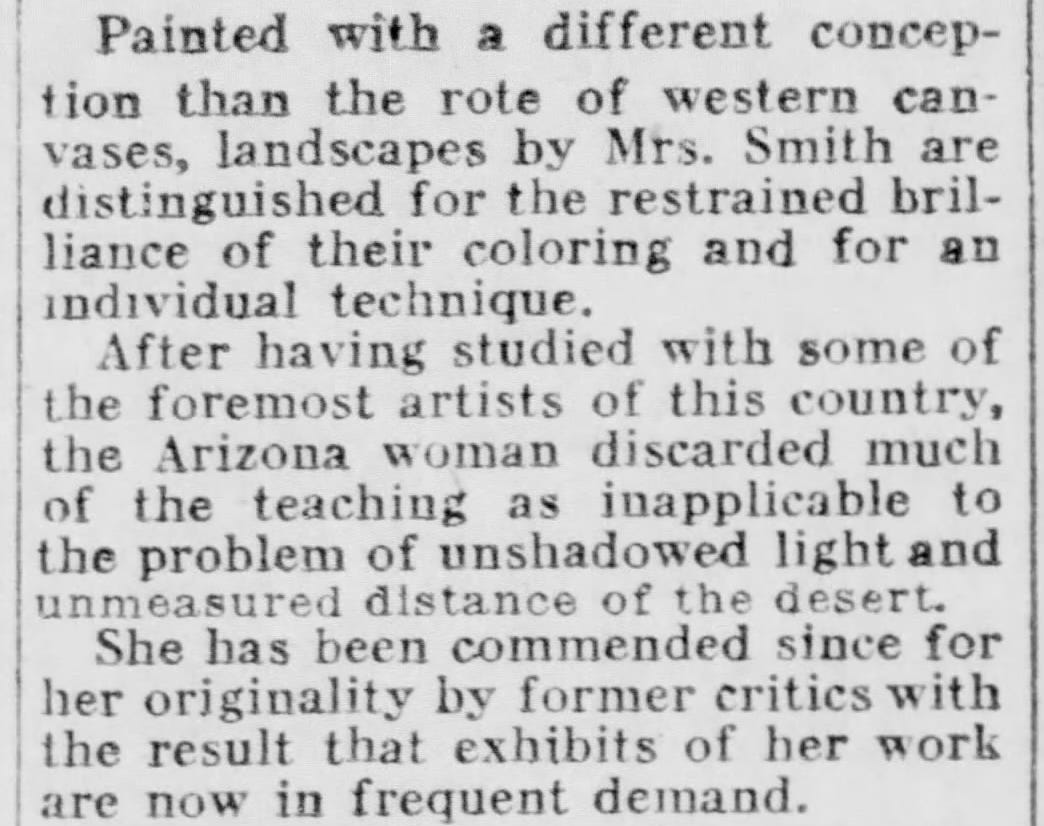
The El Paso Herald crystalized this in 1928. Effie had studied and considered these approaches to landscape painting but eventually dispensed with much of what she had learned and went her own way to capture the brilliant light the artist must deal with in painting the vast open deserts of the Southwest. In doing so, Effie created a uniquely lite color palette and very personal style we now call Arizona Impressionism.
Now, let it be said - even as we refer to Effie as a desert landscape painter - as most of her paintings place the desert at center stage, there are almost always mountains on the horizon of any scene she is depicting. That’s true going back to her earliest known Arkansas painting dated 1884.
The desert floor of the Sulphur Springs Valley, with its subtle variations of color in its grasses, soil and sand was key in Effie achieving that sense of expanse. She may direct your eye to the mountains in the distance or the yucca nearest you, but the uncluttered desert in-between - without any signs of human life or intervention - is essential. Effie loved the unspoiled raw natural beauty of the land the pioneer settlers and early explorers first encountered, and the native people’s revered for generations.
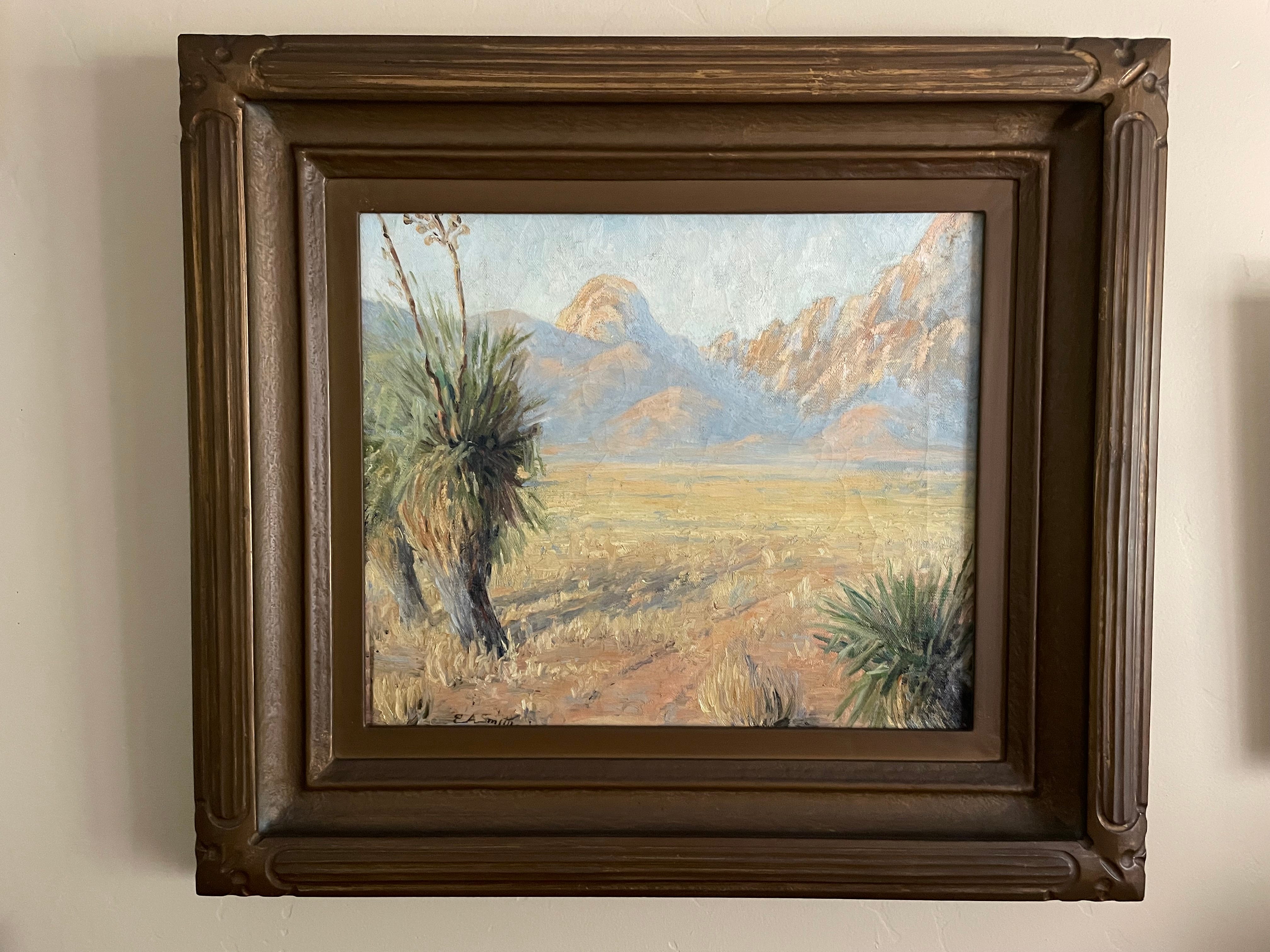
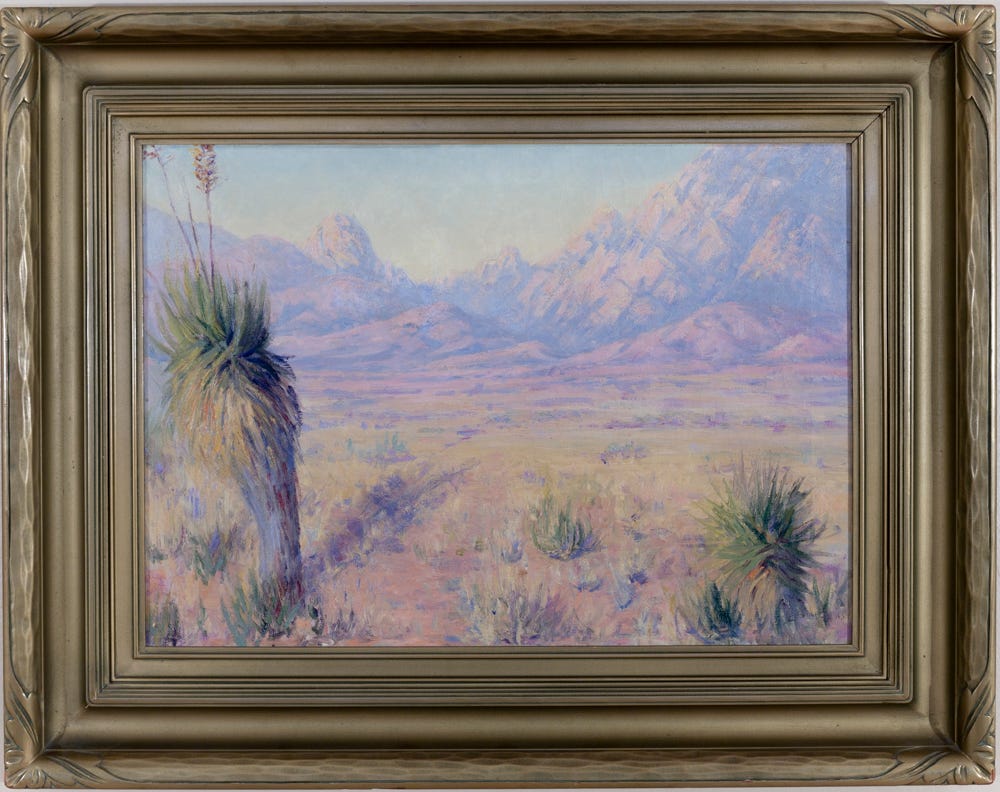
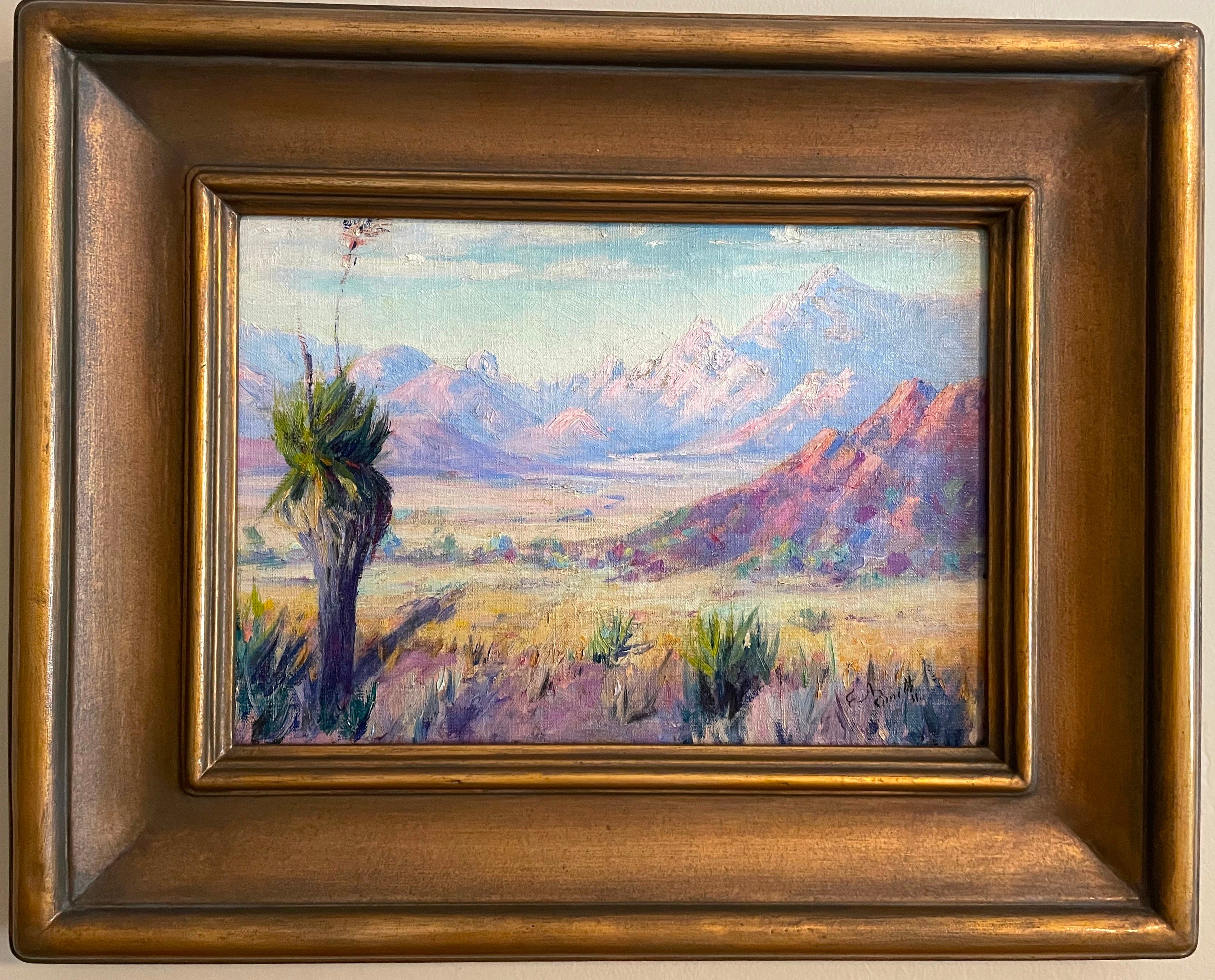
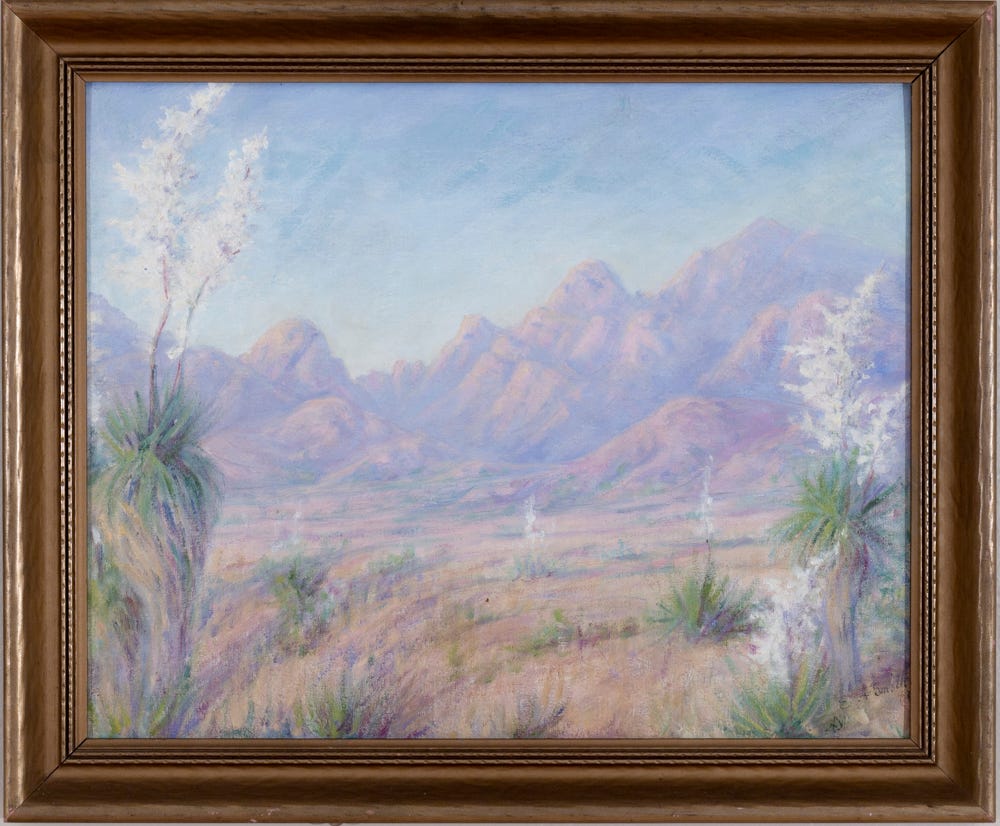
At her home of 50 years in the tiny mining camp at Pearce, Effie could always see at least two ranges relatively nearby, bordering her desert paradise. In addition to the Dragoons to her west were the Chiricahua Mountains to her east.
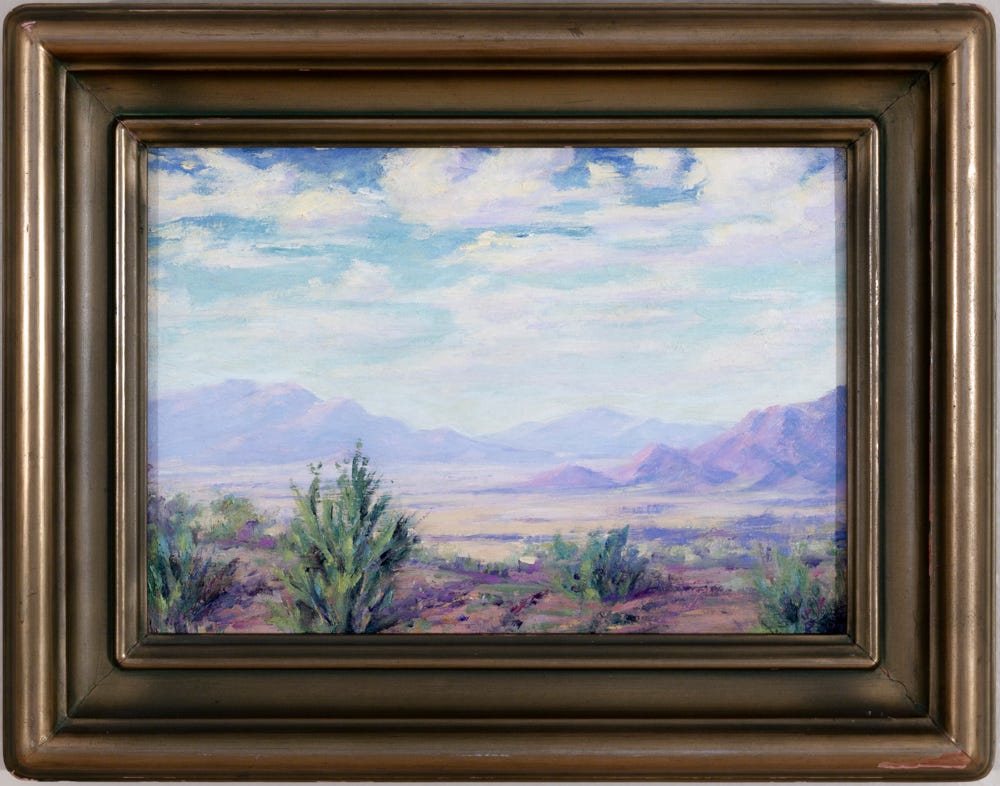
While the Chiricahuas provided a high altitude escape in the summer at the 8,000+ foot level at campgrouds such as Rustler Park, the Dragoons were much closer to the Smith’s house and could be reached for daily painting excursions, a picnic or gathering with local friends more immediately. More than any other mountains, the Dragoons and the Apache’s sacred canyon known as Cochise Stronghold were definitively the Mountains of Home to Effie & A.Y. Smith and the people of Pearce.
Effie’s Scottish born husband, Andrew Young Smith (1869-1931) undoubtedly knew the old Gaelic song Mist Covered Mountains. When the two met in Deming, New Mexico in 1894 it was a shared love of literature (Charles Dickens), theater and music which brought them together in The Once A Week Club where they both participated in all manner of amateur performances in Deming’s Opera House.
Whether Andrew ever sang Chì mi na mòrbheanna at any of the frequent social gatherings and dances at Pearce’s Huddy Hall, we can’t say. But among the Smith’s many friends working and living in the little mining camp and surrounding settlements in the shadow of the Dragoon Mountains, it’s a song that could have resonated, with it’s references to the mountain’s steep and resplendent ledges, kind folk of honor, and not ever trading those for tons of gold.
Visit Bisbee and see Effie’s Paintings…
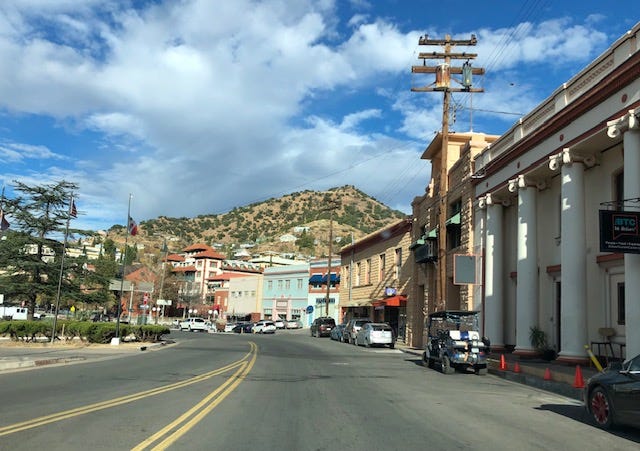
Our exhibit IMPRESSIONS OF THE DESERT is in its final weeks hosted by our wonderful friends at the Bisbee Mining & Historical Museum. Open EVERY DAY from 10 am to 4 pm (closed only on Thanksgiving & Christmas Day). We look forward to seeing you there!
Spread the Word…
You can help spread the word about Effie Anderson Smith’s timeless desert art and a slice of early Arizona women’s history by sharing this post with a friend. If you’d like to support our work to preserve and perpetuate the artistic legacy and inspiring life story of Arizona's earliest Impressionist desert landscape painter please visit our Effie Anderson Smith website and make a tax deductible donation on our SUPPORT page. We have Thank You Gifts for you there to express our gratitude for your help in saving Effie’s art.
Effie’s Artistic Legacy…
We are actively collecting Effie’s art and any artifacts, photos and letters so that these may be preserved as part of our Effie Anderson Smith Museum & Archive Collection. We know you’ll agree with others who have gifted Effie’s art to our Museum that it’s so important these elements of Arizona’s art history and Women’s History are preserved, conserved, and are on display for all to see. If you have an Effie Anderson Smith painting or artifacts you would like to offer to become part of Effie’s collected legacy, or loan for our future exhibits, please contact us.