by Steven Carlson, Curator
Welcome to another EFFIEgram tracing the art and life of Arizona’s earliest Impressionist desert landscape painter - Effie Anderson Smith (1869-1955).
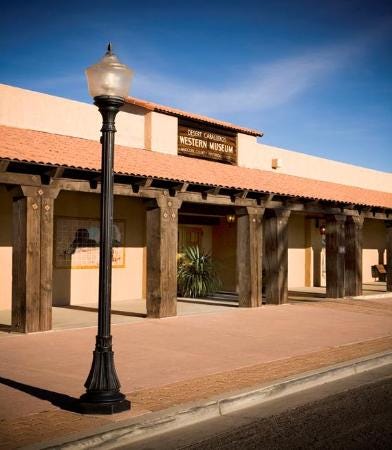
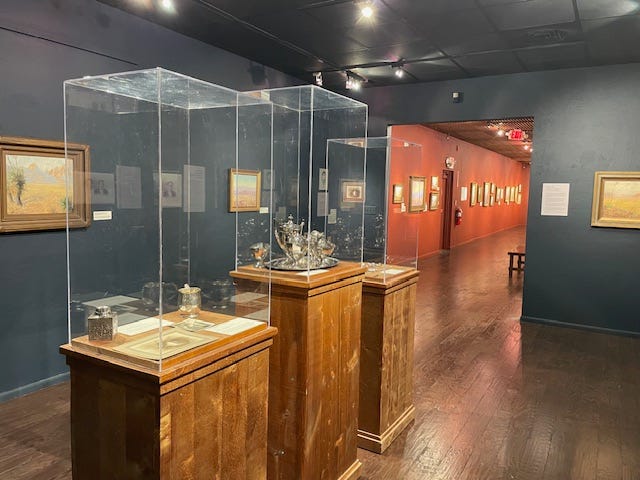
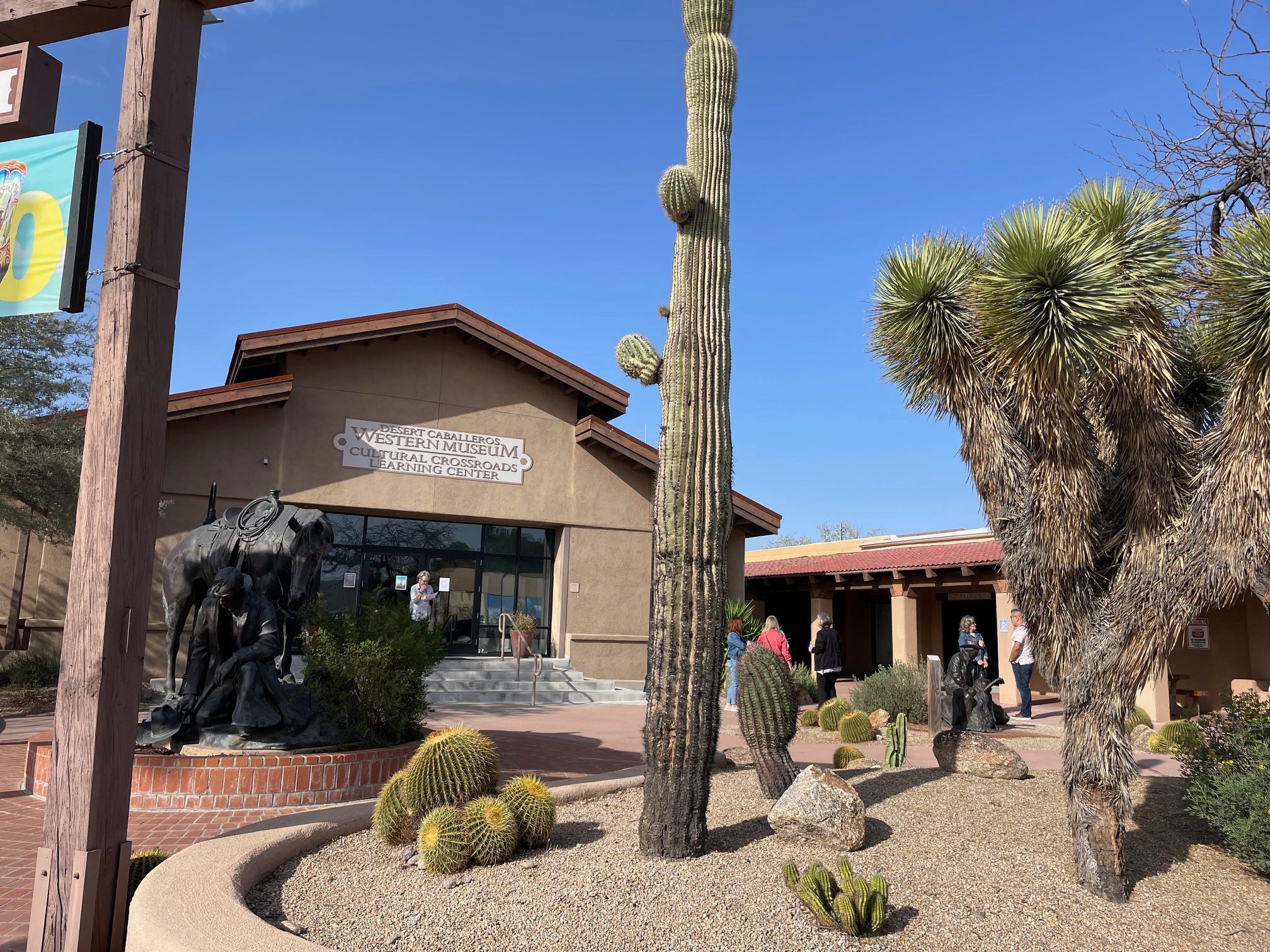
Our retrospective exhibit - Desert Paradise: The Art and Life of Effie Anderson Smith - has allowed us to bring together 55 paintings from throughout Effie’s creative life, stretching from 1884 to 1949. While viewing the exhibit in the three galleries it occupies at Wickenburg’s beautiful Desert Caballeros Western Museum, several subjects in Effie’s art become clearer to us - especially on this rare occasional when we can view, study and compare each painting with so many others in this show.
Effie’s series of Grand Canyon paintings, her series focusing on Cave Creek Canyon in the Chiricahua Mountains, and especially Effie’s paintings devoted to Cochise Stronghold in the Dragoon Mountains of Southeast Arizona, present us with several major subjects that recur in her output throughout the 1920s, 30s and 40s. In fact, her series of Cochise Stronghold paintings began in the early 1900s along with her paintings in Central Arizona - including those around the Superstition Mountains and in Oak Creek Canyon. Those begin to appear about 1908 on into the early 1920s - but more than 50 of those paintings were lost in the fire that consumed Effie’s home and studio on September 17th, 1929. Thankfully, a very few examples of these have survived in the hands of people she sold or gifted them to before the fire.
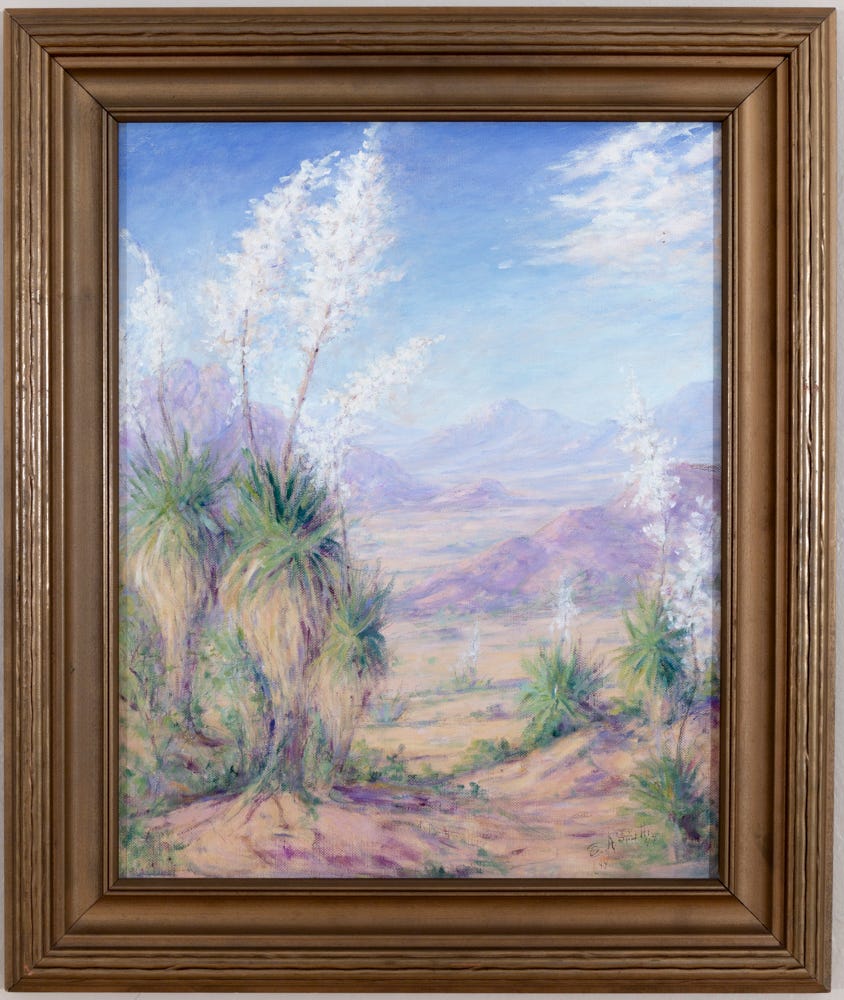
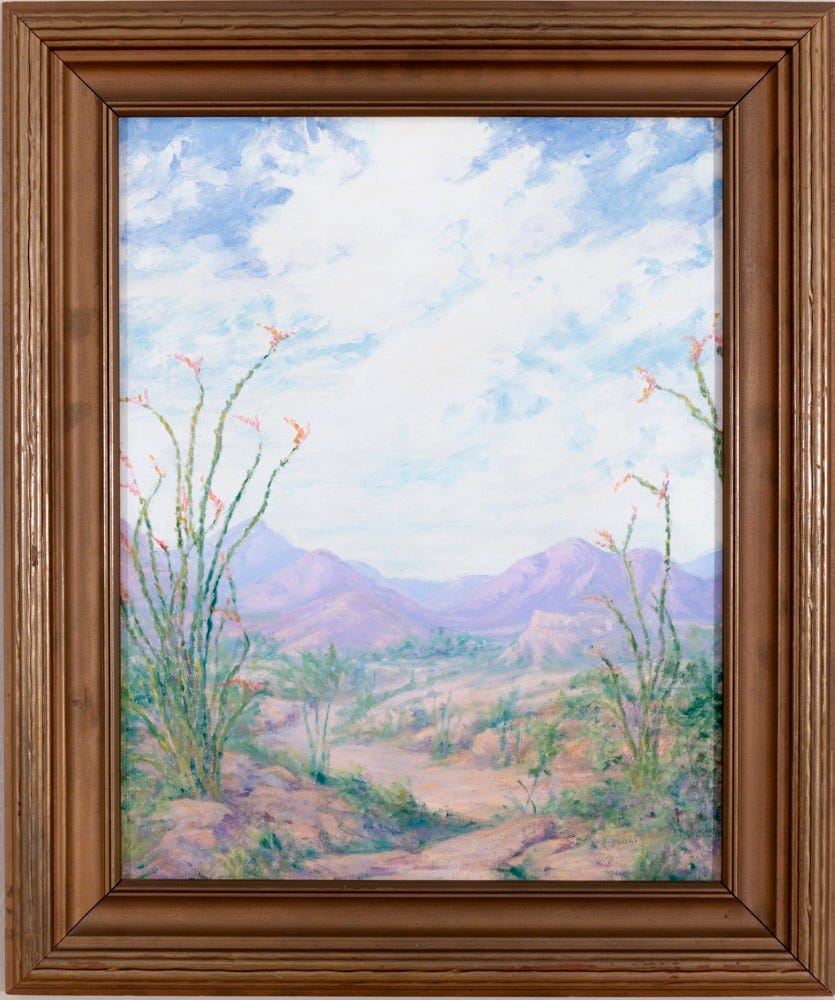
Beyond the various canyon and mountain range paintings mentioned above are Effie’s desert flora works - which first emerged in 1936 and begin to dominate her art in the early 1940s - especially her series of Yucca and Ocotillo paintings of that period. Whereas desert flora had been a frequent peripheral element in her canyon paintings for many years, native desert plants begin to take center stage - or - at least, become the stars of her later paintings - a focus which reached its zenith in 1947 with the pair of paintings above. What is less obvious - because it seemed a secondary factor in so many of her paintings in earlier years - is Effie’s mastery of the sky, especially when it comes to painting clouds.
Evidence (in the form of recently rediscovered paintings) is emerging in the last few years that supports the probability that Effie created yet another series of paintings where cloud formations are the focal point.
Big Clouds - Cumulus
The painting below is one example, recently re-discovered in the archives of the Bisbee Mining and Historical Museum. It had been gifted to BMHM by a museum patron in the 1980s and unknown to us until recently. Here it’s a cumulus cloud that Effie wants us to contemplate.
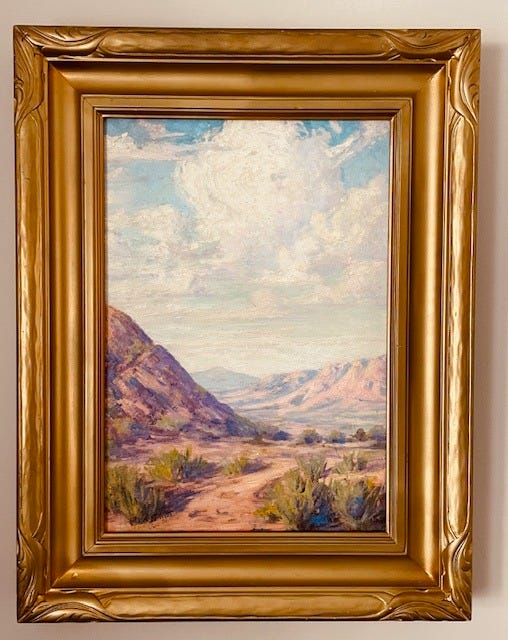
In another of Effie’s paintings that we recently re-discovered through it being sold at Bradford’s Auction Gallery in Sun City (Arizona) we again see a cumulus cloud - this time a bit more stormy looking - as the painting’s focal point.
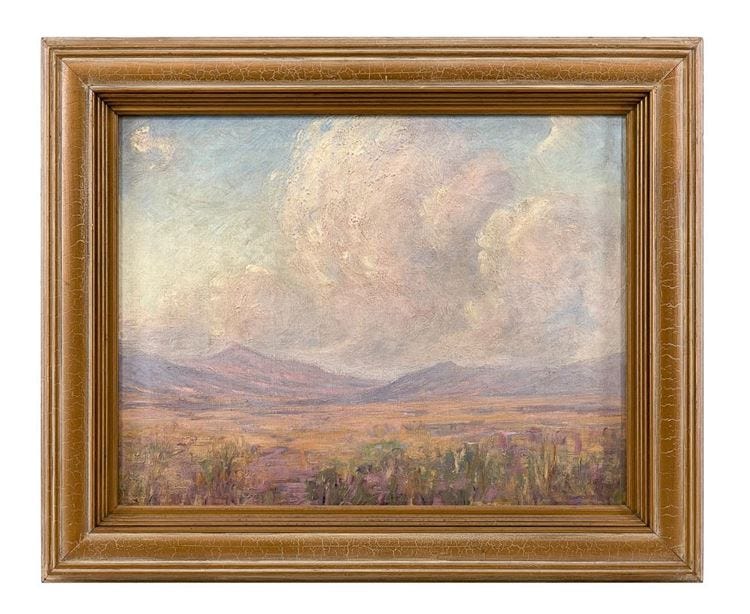
Clouds of other types appear in Effie’s paintings across the decades as we see in these examples below, all of which are now on view for you to compare and enjoy in our Desert Paradise exhibit honoring Effie Anderson Smith, now at Desert Caballeros Western Museum.
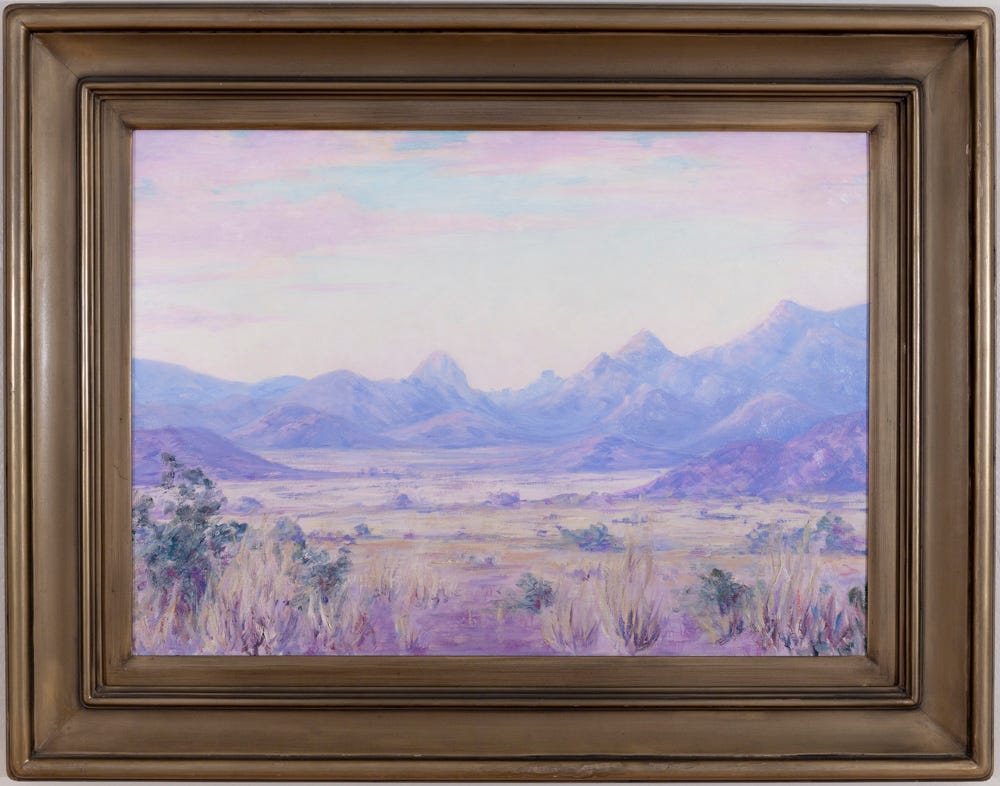
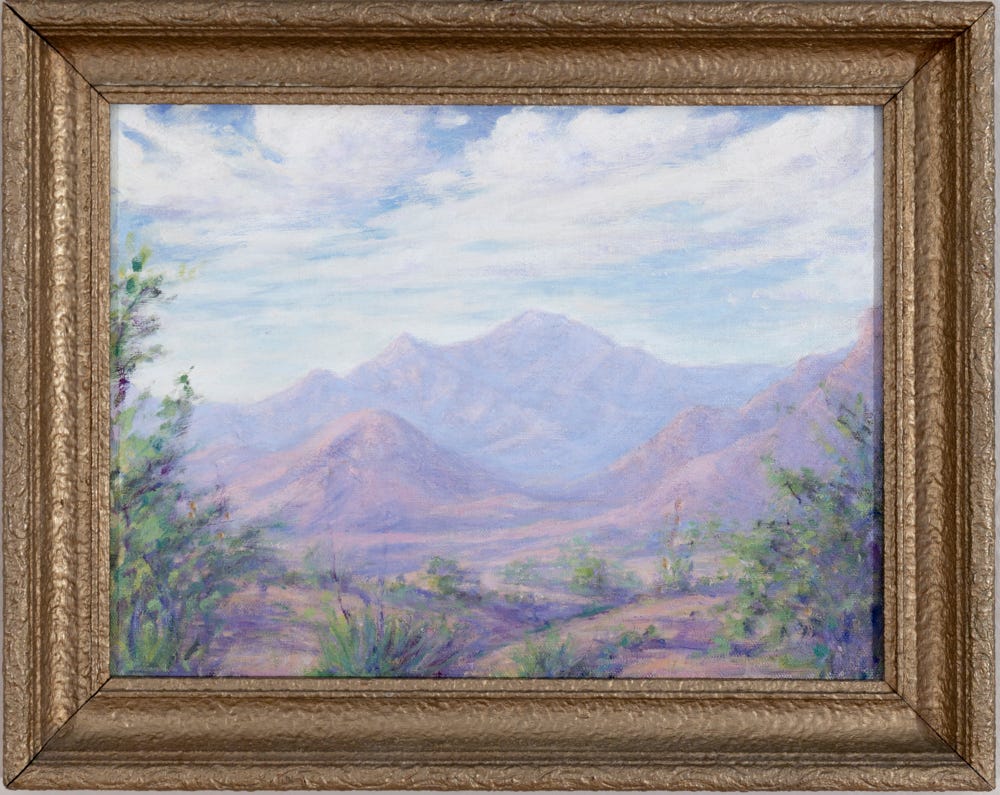
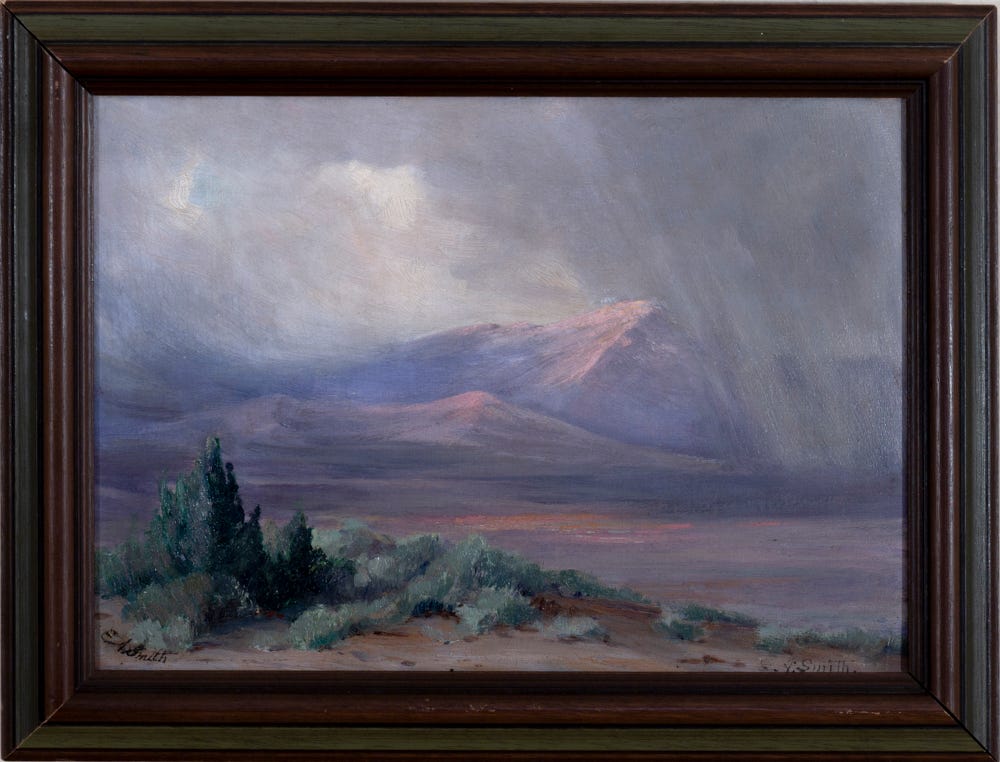
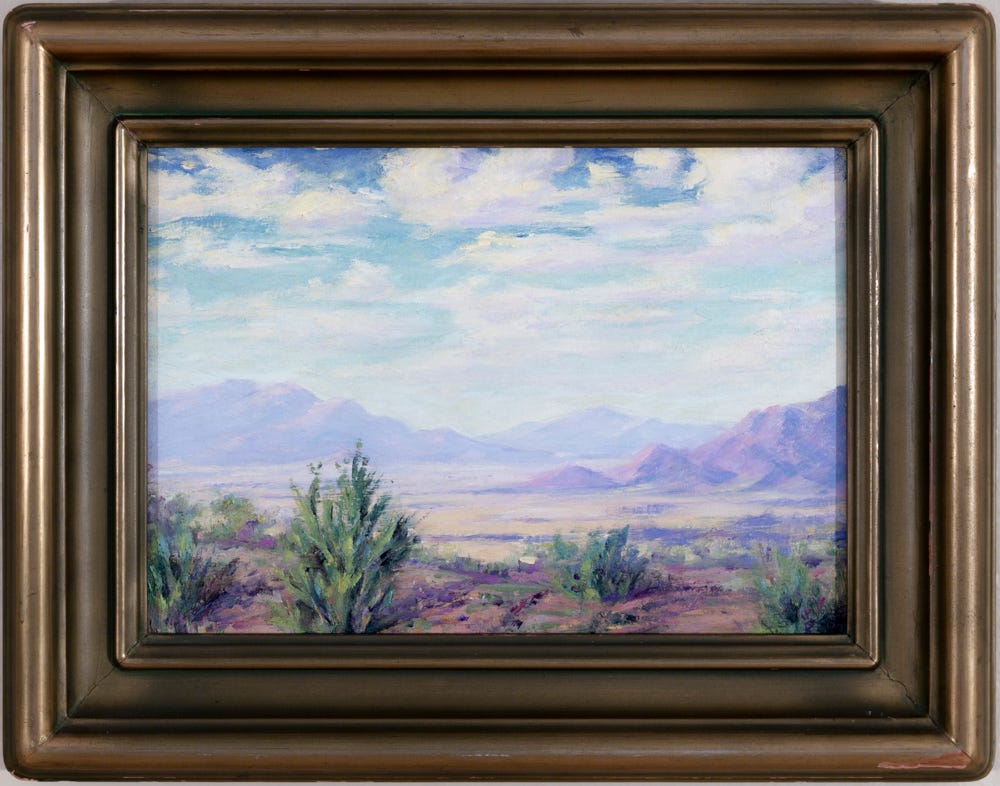
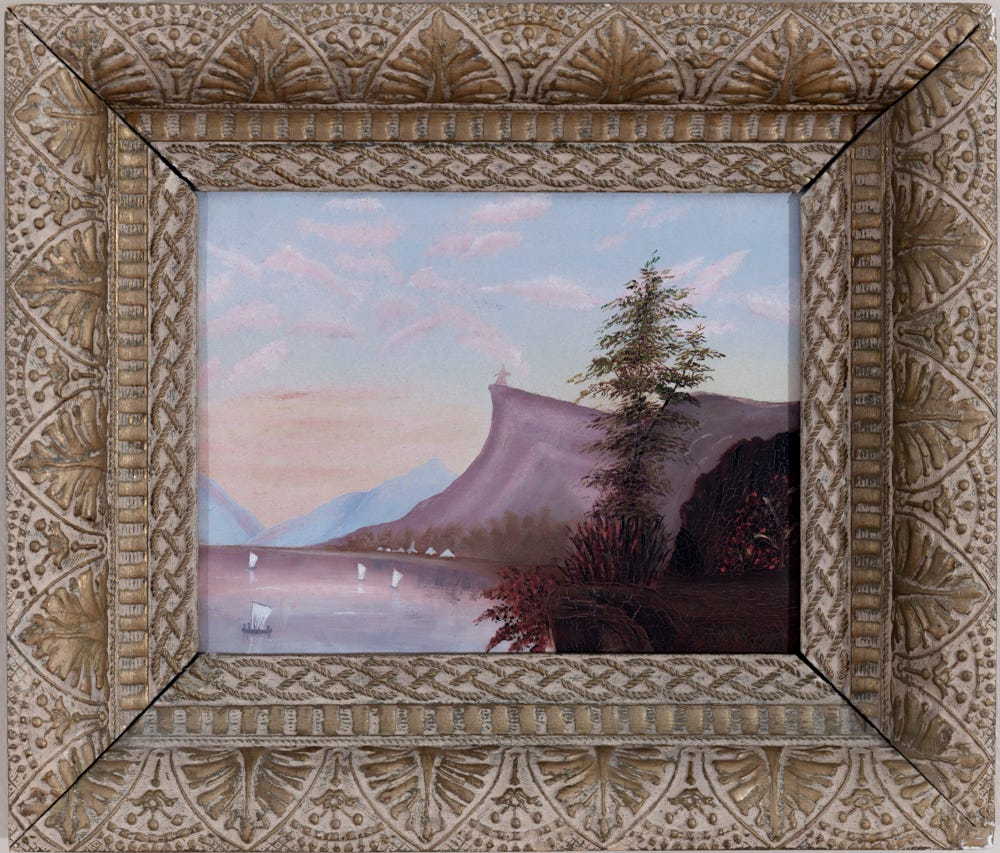
We see from the last painting above, completed during Effie’s first years as an active artist in her native Arkansas, that her fascination with clouds was already a factor in her art. Not only is there an attempt at a rosy sunset or sunrise low on the horizon, but higher up in the sky Effie’s clouds are so playful they’ve always reminded me of a school of pink fish or a large pod of pink dolphins!
The point being, it’s often worth paying as much attention to what’s going on in the sky in one of Effie’s paintings - above the vast expanse of canyons, mountains or desert - as the rest of the painting. In our current exhibit of 55 paintings by Effie, this is easier than ever to appreciate.
The concept of a series of paintings on a certain subject matter is relevant to understanding Effie’s art as her Arizona Impressionism may be thought of as an offshoot of the California Impressionism she studied and embraced in the early 1900s and the French Impressionism that her California mentors studied first hand in and around Paris in the late 19th century and evolved into California Impressionism in the Pacific coastal art colonies.
The value of Nuance
What do you get when an artist returns to the same scene or subject repeatedly over several months or years, and in different times of day and seasons? Nuance.
Among the French Impressionists, we know that leading figures like Claude Monet would return to certain favorite locations again and again over a span of years to continue a series of art works on certain subjects he was drawn to. In the case of Monet, some sources identify these series by subject matter and how many times Monet was inspired to create his impression of the subject or location on canvas. You can follow the hyperlinks below to see examples of the wide range of nuance Monet achieved in his series on each subject or location, on the pages of Wikipedia…
For Effie, having studied with California Impressionists who had their own list of favorite recurring subjects in their art, it shouldn’t come as a surprise that Effie had her own favored recurring subjects and locations. Surveying all the 100+ paintings by Effie Anderson Smith that I have personally seen and documented over the past 15 years as Curator of the E.A. Smith Archive, I can attest to these recurring subjects and locations in her Arizona art over the span of 5 decades of her creative life…
Desert and Mountain Vistas seen from the artist’s home at Pearce
Cochise Stronghold in the Dragoon Mountains
Cave Creek Canyon in the Chiricahua Mountains
Grand Canyon from various viewpoints on the South Rim
San Francisco Peaks near Flagstaff
San Jose and Little San Jose Peaks near Bisbee
Scenes along the Coronado Trail
Yuccas, in various stages of bloom
Ocotillos, in various stages of bloom
Desert flora
Of course, the study of Monet’s art and that of the other French Impressionists has been ongoing for more than a century so there’s much for detailed data on their known works, subjects and the years those artists created works on various subjects.
Paintings by Effie Anderson Smith (1869-1955) that have been previously unknown to us continue to emerge from the shadows of time, which we continue to add to our catalogue raisonné for Effie’s art as I am able to inspect and document them personally. Our work will surely be ongoing for many years to come.
In Effie’s case, we are only aware of her announcing her intent to create two specific series. She did this in the ‘social’ media of her day - the Douglas Daily Dispatch. During newspaper interviews she commented on having overlooked (until 1942) the possibility of making desert flora (yuccas and ocotillos especially) the focal point of her art works. A few years later, she mentioned to a reporter from the Dispatch in 1947 that she had begun a new series of paintings of scenes along the Coronado Trail. By then she was living in a bustling metropolis (Douglas) and this was probably as much a conscious marketing effort by Effie to sell these paintings. But it also validates our belief that she was aware of having created various series of works related to certain subjects - perhaps after the fact - and had realized there was good reason to conceive and speak of her current efforts in those terms.
And so - I hope you take away from all this the inherent value in bringing together a major retrospective exhibit on a single artist’s work - in our case the art of Effie Anderson Smith - as it allows us to look across the totality of her creative life (65 years with Effie) enabling us to study a wide range of her art for an extended period of time.
While our exhibit is on display we can search for the obvious and subtle recurring elements and nuances that might otherwise be lost on us when seeing any of these paintings individually. This also includes the period frames - many of which were Effie’s thoughtful choice from favorite frame makers. Our retrospective affords us a glimpse at the evolution of the artist and her aesthetic choices across several decades.
We are grateful to Desert Caballeros Western Museum and Curator Dr. Tricia Loscher for this rare opportunity to assemble the largest exhibit ever of desert paintings by Effie Anderson Smith.
I especially was intrigued by the fact that Tricia’s professional bio mentions her early fascination with painting skies and clouds in her youth. And so, I think you’ll agree when you see this exhibit that Tricia was the perfect curator, and most sympathetic Museum partner, to hang this show!
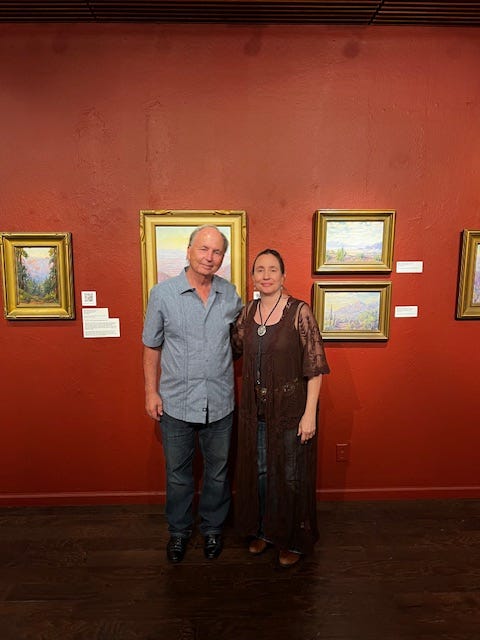
I hope that you can visit our exhibit in Wickenburg very soon so you can discover for yourself you own Effie favorites - and discern Effie’s favorite subjects and trace her own personal artistic journey toward her development of Arizona Impressionism. You’ll see a once in a lifetime gathering of Effie Anderson Smith’s timeless desert art from public and private collections - art that embodies the Arizona experience.
Join us Saturday, October 11th at Desert Caballeros Western Museum for a Day with Effie
On October 11th, I’ll be at the Museum and our exhibit ALL DAY. The museum is open 10:00 am to 5:00 pm on Saturdays and I’ll be giving 2 talks on the 11th. The first is in the morning to Desert Caballeros Western Museum Members.
From 1:00 pm to 4:00 pm in the Desert Caballeros Western Museum’s main galleries I will be greeting you there for An Afternoon with Effie - and at approximately 1:30 I’ll present a Walking Tour Talk through the exhibit introducing you to many of the most important paintings and discussing connections between works in our exhibit. I also have a 20 minute slide deck running on a big screen in the exhibit showing highlights of Effie’s life and art, as well as the art of the circle of women students Effie mentored during the 1930s and 40s at her home in Pearce and later in Douglas and Tucson - which I will narrate for you, in person!.
It’s important to see the connection between Effie’s art works and the legacy she left through her teaching and imparting her technique to other women seeking their own creative path of expression in desert landscape painting and how they embraced Effie’s brand of Arizona Impressionism as the foundation of their own artistic journey.
*** Please RSVP *** to us at info@EffieAndersonSmith.org if you plan to attend on Saturday, October 11th so we can be watching for you and have some refreshments waiting for you that afternoon at about 3:00 pm.
Hope to see you THIS SATURDAY - October 11th - from 1-4 pm for Afternoon with Effie at Desert Caballeros Western Museum in Wickenburg!